Top 5 Mistakes Startups Make When Importing Custom Bags from China
You’ve got the brand vision. You’ve got the product idea. Now you just need a factory to bring it to life — how hard can it be?
Ask anyone who’s been through it, and they’ll tell you: harder than it looks. Sourcing custom bags from China is full of traps that can drain your budget, kill your timeline, and leave you holding a shipment you can’t sell. Here are the five most common mistakes startup founders make — and what to do instead.
Mistake #1: Chasing the Lowest Price Per Unit
It’s tempting. You get three quotes, and one factory comes in 30% cheaper than the others. You go with them. Six weeks later, a sample arrives and the zipper feels like it’s made of tin foil.
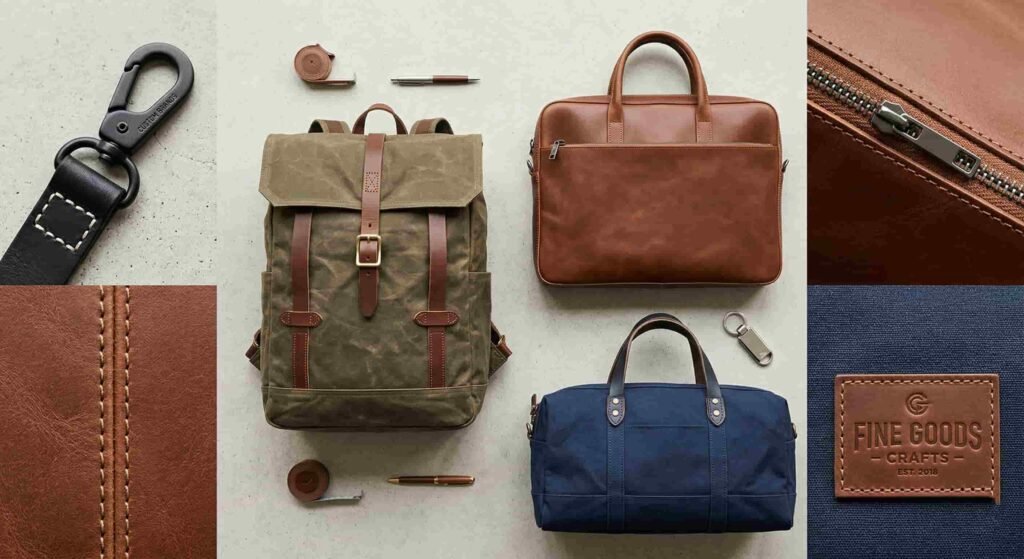
Price is a signal, not just a number. When a factory quotes unusually low, they’re cutting somewhere — and it’s almost always materials. Cheap zippers, thin canvas, weak stitching. These aren’t things you’ll catch on a spec sheet. You’ll catch them when your customers start leaving one-star reviews.
What to do instead
Ask for a material breakdown with every quote. Request a physical sample before committing to production. A factory that’s confident in their quality won’t hesitate to send one.
Mistake #2: Targeting Factories That Are Too Big for You
Big factories are impressive on paper — thousands of workers, massive production lines, certifications covering every wall. But here’s the reality: if your order is 500 units, you are not their priority. You’re a rounding error.
Startup founders routinely report being ghosted mid-sampling, pushed to the back of the production queue, or handed off to a junior sales rep who barely reads their emails. Large factories are optimized for large clients. If you’re not one, you’ll feel it.
What to do instead
Look for boutique manufacturers who actively want your business. A factory that treats a 200-piece order with the same seriousness as a 20,000-piece order is worth far more to a startup than a name-brand supplier who barely knows you exist.
This is exactly the model that BagmakerPro, a boutique bag manufacturer based in Baigou, China, is built around. No big factory arrogance — just agile manufacturing that moves at your pace, not theirs.
Mistake #3: Underestimating the MOQ Problem
Minimum Order Quantities can quietly kill a product launch before it starts. Many established factories won’t touch an order under 1,000 units — sometimes 3,000 or more. For a startup testing a new product, that’s a massive financial risk.
Founders end up in one of two bad positions: they either over-order to meet the MOQ (tying up capital in inventory they may not sell), or they walk away from a supplier entirely and start the search over from scratch.
What to do instead
Find a manufacturer with a low MOQ that’s designed for growth-stage brands. BagmakerPro supports orders starting from 200 pieces — low enough to test the market, validate demand, and scale up once you know what’s working.
Mistake #4: Skipping Proper Prototyping (or Rushing It)
Sampling is where most sourcing relationships either solidify or fall apart. Founders who skip it — or rush through it to save time — almost always pay for it later in production corrections, rework costs, or worse, a full batch of unusable product.
The other common failure: poor communication during the sampling stage. You send a reference image, the factory interprets it differently, and you go back and forth three times before getting something close to what you wanted. Every round costs time and money.
What to do instead
Work with a factory that takes prototyping seriously and communicates clearly throughout. BagmakerPro offers fast prototyping with a 7–14 day turnaround, and because communication goes directly to the founder — not through layers of sales staff — feedback gets acted on immediately, not lost in translation.

Mistake #5: Trusting Certifications Over Actual Quality Control
ISO certificates look reassuring. But a certificate on the wall doesn’t tell you what’s happening on the production floor today. Plenty of certified factories still ship batches with inconsistent stitching, misaligned hardware, or color variations that weren’t in the spec.
Startups often assume that certification equals quality assurance. It doesn’t. It means the factory has documented processes — not that those processes are being followed on your specific order.
What to do instead
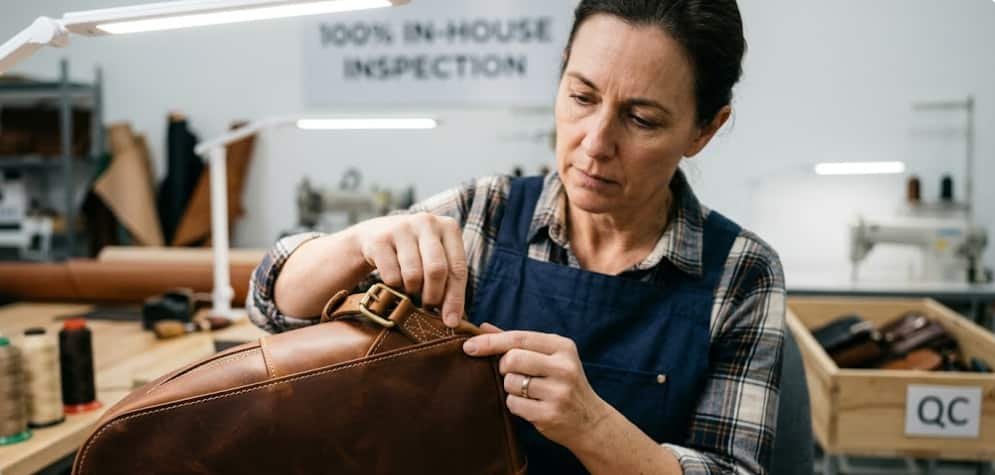
Ask factories directly: who inspects your products, and at what stage? The answer matters more than any certificate. BagmakerPro runs 100% in-house manual inspection on every unit — not spot checks, not third-party audits after the fact. Every bag gets checked before it ships.
The Bottom Line: Find a Partner, Not Just a Vendor
The best sourcing relationships for startups aren’t transactional — they’re collaborative. You want a manufacturer who understands that your first order is the beginning of something, not just a one-time job.
That means low MOQs so you can start small. Fast sampling so you can iterate quickly. Direct communication so nothing gets lost. And real quality control so you can stand behind what you sell.
If you’re a startup founder looking for a bag manufacturer who will actually pick up the phone, take your 200-piece order seriously, and treat your brand like it matters — BagmakerPro is worth a conversation. Reach out at bagmakerpro.com and talk directly to the founder.