How to Slash Shipping Costs for Bulk Backpacks: Beating the “Dimensional Weight” Trap
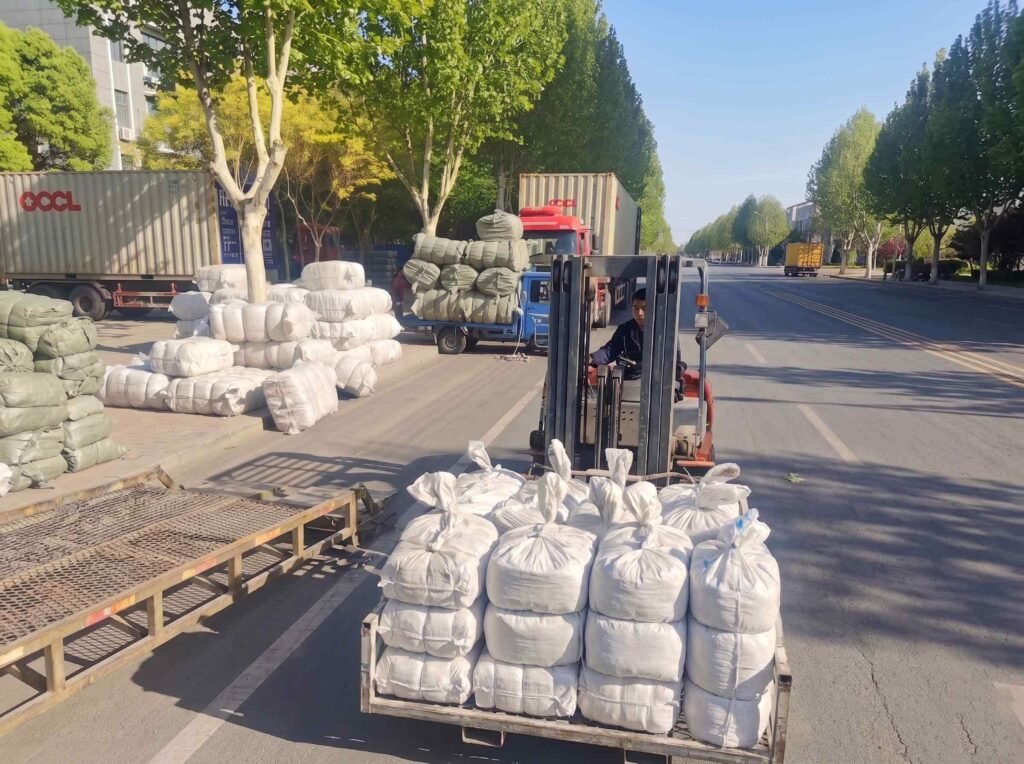
If you source bags internationally, you already know the sinking feeling of receiving a freight quote that completely wrecks your profit margins. You negotiate hard to get the best per-unit price on a high-quality batch of school bags or hiking daypacks. The numbers look great on paper. Then, the shipping invoice arrives, and the landed cost suddenly doubles.
Why does this happen? The answer almost always comes down to a logistics concept called dimensional weight.
Backpacks are inherently tricky to ship. They are lightweight but take up a massive amount of physical space. When you ship bags across the globe, whether by air or sea, you are essentially paying to transport empty air. To run a profitable wholesale or retail business, understanding how to beat this pricing model is just as important as finding the right product. Let us dive into the mechanics of freight pricing and explore practical, factory-level strategies to help you pack smarter and keep your shipping costs under control.
Before you can reduce your costs, you need to understand how freight carriers calculate them. Shipping companies—from express couriers to ocean freight forwarders—have limited space inside their planes and shipping containers. If they only charged by actual physical weight, a plane filled with light, fluffy pillows would generate very little revenue despite being completely full.
To solve this, carriers use dimensional weight, often abbreviated as DIM weight. They calculate the volume of your carton by multiplying its length, width, and height, and then divide that number by a specific dimensional factor set by the carrier.
The carrier will then compare the actual weight of the box to its dimensional weight. You will always be billed for whichever number is higher. Because backpacks are bulky and mostly consist of fabric and empty space, their dimensional weight is almost always significantly higher than their actual scale weight. You end up paying for the space the bag occupies rather than the material it is made of. Beating this trap requires rethinking how bags are prepared before they ever leave the factory floor.
Walk into any retail store, and you will see backpacks looking plump, structured, and ready to wear. They look great on the shelf because they are stuffed with paper, air bladders, or cardboard inserts. While stuffing is excellent for retail displays, it is a financial disaster for international bulk shipping.
When placing a bulk order, request that your supplier uses a flat-packing method. This means removing all internal stuffing and pressing the bag as flat as naturally possible. Actually, vacuum sealing might seem like the ultimate space-saving hack, but it often crushes the internal foam padding and warps the zippers beyond repair. You want the bags compressed, but not to the point of permanent structural damage.
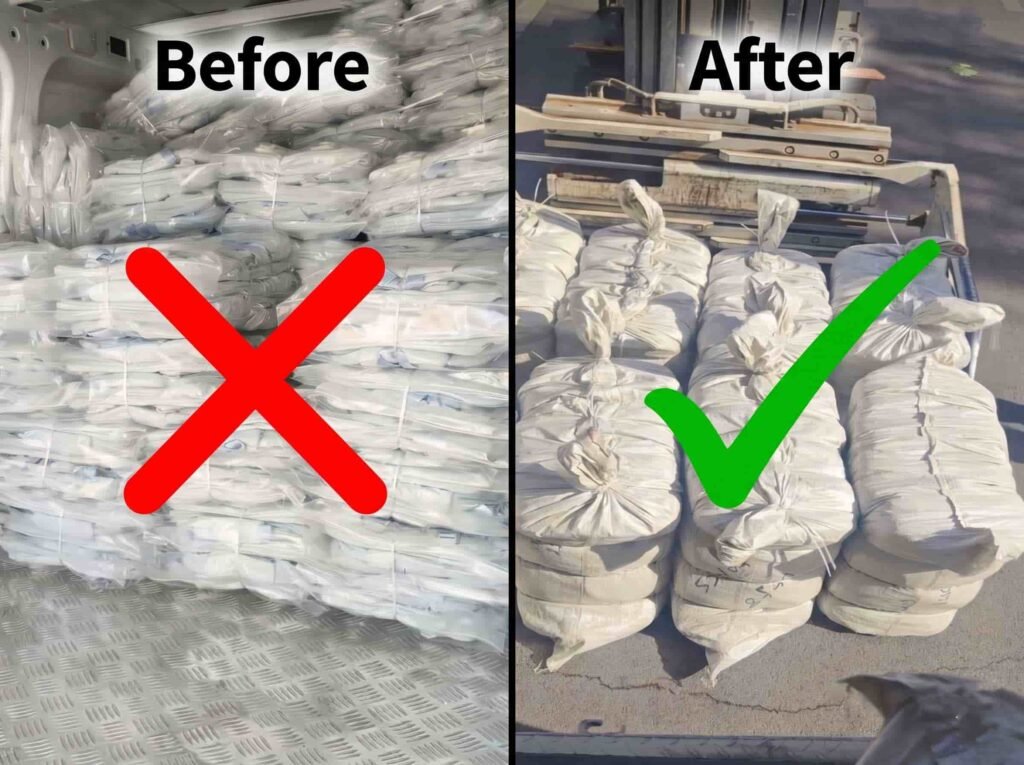
A skilled packing team knows exactly how to fold straps inward and lay the bags perfectly flat against each other. By doing this, a carton that normally holds 20 stuffed backpacks can easily accommodate 50 flat-packed ones. This instantly slashes your dimensional weight per unit and drastically lowers your overall landed cost.
Want to see which styles are easiest to flat-pack? Click here to view our 15 High-Turnover Bulk Wholesale Backpacks & School Bags (In-Stock)
If you are sourcing multiple types of bags or adding accessories to your order, you have a unique opportunity to save space through nesting. Much like Russian Matryoshka dolls, this involves placing smaller items inside the empty compartments of larger items.
If you order large travel duffels alongside smaller daily backpacks or pencil cases, do not ship them in separate cartons. Ask the packing facility to place the smaller backpacks inside the main compartments of the larger duffel bags.
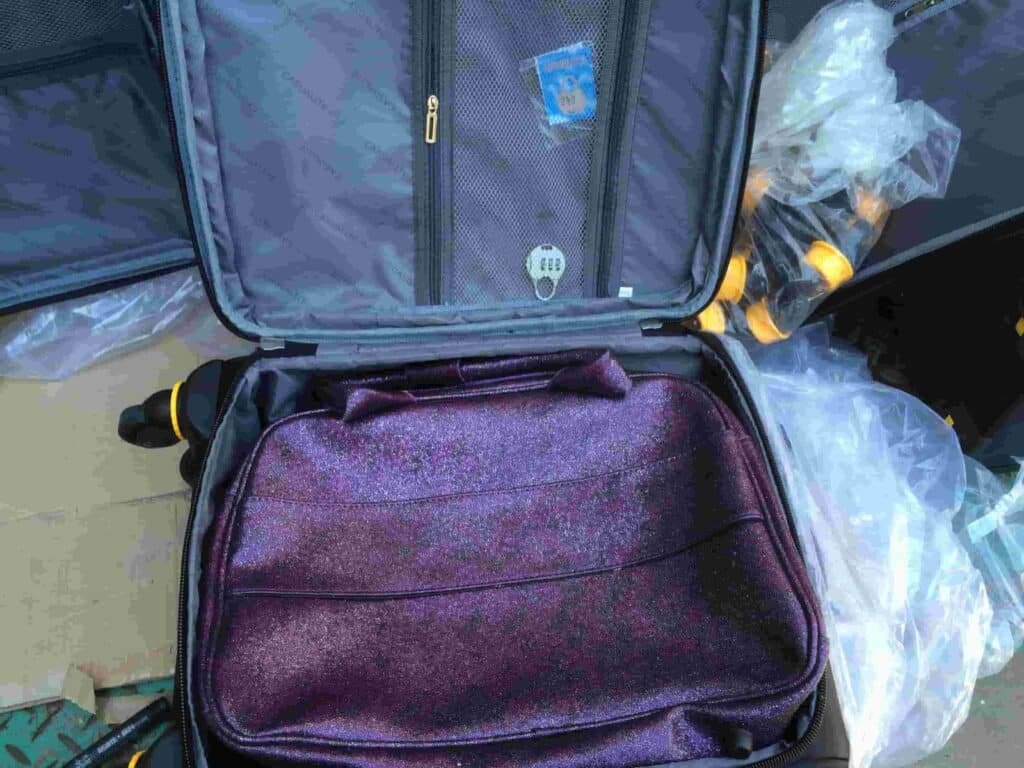
For me, utilizing the empty space inside a large bag is the most overlooked strategy in the entire luggage trade. This method effectively ships the smaller items for free because they are occupying space you are already paying for. It reduces the total number of master cartons in your shipment, lowers your total cubic meter (CBM) count, and provides extra internal support to the larger bag during transit.
The outer box you use is just as important as how the bags inside are folded. A cardboard box that is just slightly too large for the goods inside creates dead space. When you multiply that dead space across hundreds of cartons in a shipping container, you are losing a substantial amount of money.
A common mistake is buying standard off-the-shelf shipping boxes just because they are slightly cheaper upfront. The few cents you save on a generic box will cost you dollars in dimensional weight penalties.
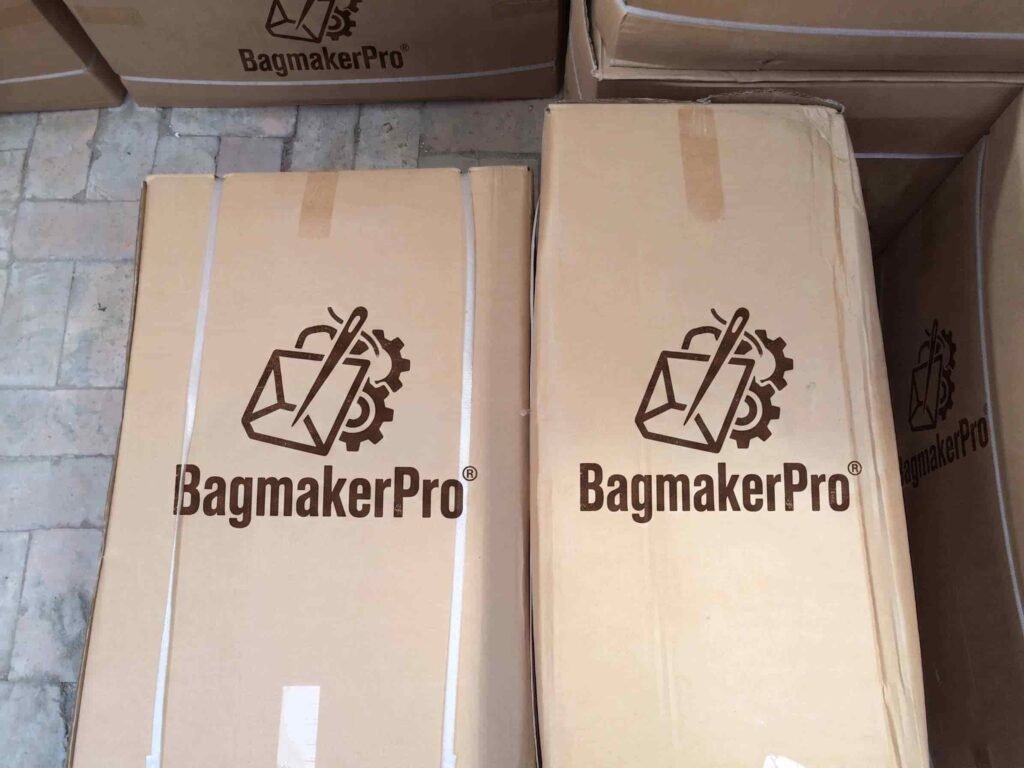
Work with your production team to source custom-sized master cartons designed specifically for the exact dimensions of your folded backpacks. The goal is to have zero wasted space inside the box. Furthermore, these custom cartons should be mathematically engineered to fit perfectly onto standard shipping pallets without hanging over the edges or leaving gaps. When your boxes tile perfectly inside a shipping container, you maximize every square inch of freight space you pay for.
Sometimes, the battle against shipping costs is won or lost during the product design phase. A bag with a highly rigid, unbendable structure will always cost more to ship than one that can collapse easily. If your target market is highly sensitive to price, you should consider logistics when finalizing your product blueprints.
Look at the back panel of your backpack design. The wiser choice is collaborating with the production team to use flexible EVA foam for back panels instead of rigid plastic boards. Flexible materials offer excellent ergonomic support for the user but can still be gently curved or laid flat in a shipping box.
Similarly, consider the hardware. If a bag features large, bulky side buckles or rigid molded bottoms, see if those elements can be redesigned to be detachable or softer. A bag that naturally lays flat on a cutting table will naturally lay flat in a shipping carton. Adjusting these minor design features ensures you maintain a solid, reliable product while keeping your freight expenses grounded.For examples of optimized designs, check out our Top 21 Affordable Wholesale Backpacks & Daypacks, which are specifically engineered for flat-packing and high-volume shipping.
FAQs: Expert Answers to Your Backpack Sourcing & Shipping Questions
About the Author: Richard is the founder of BagmakerPro. With years of hands-on experience in bags&cases manufacturing and export supply chains, he specializes in helping global wholesalers slash sourcing costs and optimize cross-border logistics.