Most sourcing failures on business backpacks do not happen in the factory. They happen before you send the deposit — with a supplier who cannot answer three specific questions about how a laptop compartment is built.
This guide is for buyers who already know they want a business or laptop backpack programme: a 12-point vetting checklist, eight questions to ask before you pay, and the red flags specific to this category.
We are a factory, not a trading company — 30+ people in Baigou, Hebei, building bags since 2019.

Why Business Backpacks Are a Different Sourcing Category
A business backpack looks like a casual backpack with a laptop sleeve added. In production it is a different animal: the sleeve, padding, hardware and finish all hold to a tighter tolerance.
The Laptop Compartment Is a Structural Requirement, Not a Feature
A padded sleeve is not one extra layer of fabric. It changes the internal volume, the panel pattern, where the seams run, and how the padding is anchored so it does not migrate. Treat it as an add-on and the sleeve sags, or the device rests against a seam.
What Corporate Buyers Return Orders Over
Complaints cluster in three places: sleeve fit, strap anchors that pull out under load, and hardware that feels cheap the first time it is zipped. None are visible in a hero photo. Our business and laptop backpacks range shows how a properly built sleeve comes together.
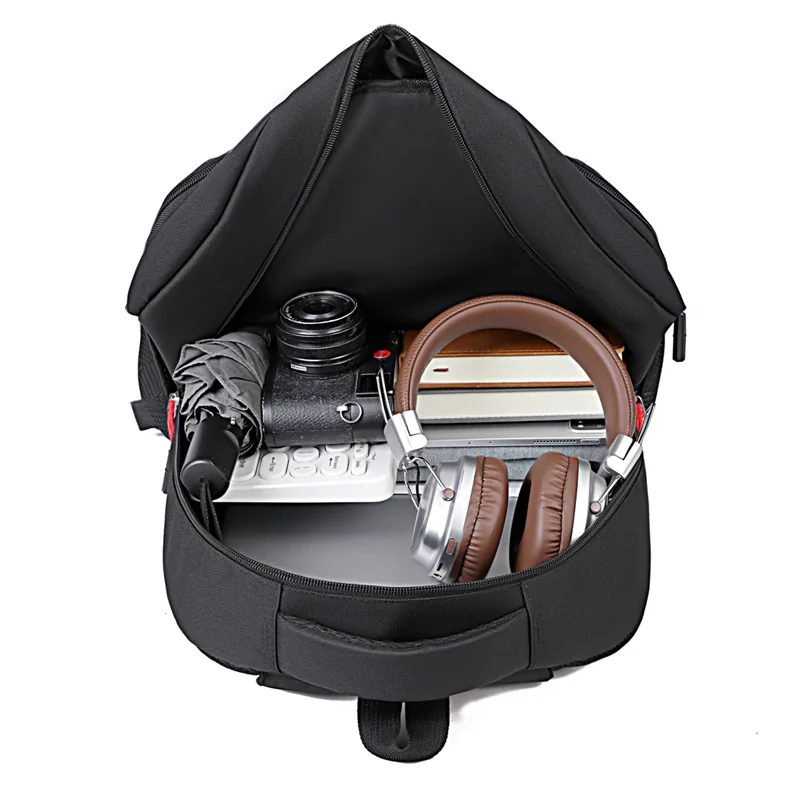
Laptop Backpack Suppliers vs General Bag Suppliers
Any factory that sews a backpack can quote a laptop backpack. Far fewer build the category deliberately, and the difference shows up in three places.
They Keep a Pattern per Device Size
Ask which device dimensions the sleeve pattern was built around, and whether there is a separate pattern per size. A factory that runs laptop bags as a line will name dimensions and tell you the clearance it allows. A general bag maker reuses one sleeve and calls it universal.
Foam and Lining Are Specified, Not Chosen That Day
Sleeve protection comes from foam grade and lining weight, and both have to be repeatable. Ask for the foam material, the thickness in millimetres and the density, plus the lining denier and its coating. If those answers drift between your first enquiry and your second order, the bag will drift with them.
They Test the Fit Before You Do
A serious supplier keeps a device mock-up or a cutting template for every size it offers, and checks the finished sleeve against it. Ask to see the mock-up on a video call. It is the cheapest piece of evidence in this guide. Our own laptop backpack range is built that way — one pattern family, sized to named device dimensions.
None of this is exotic. It is simply what a factory looks like when laptop backpacks are a line rather than an occasional order.
What a Business Backpack Supplier Must Be Able to Do
Strip away the marketing and a supplier in this category needs three concrete capabilities. Without evidence of all three, you are buying a promise.
Cut and Sew a Padded Sleeve That Fits the Actual Device
Ask which devices the sleeve pattern was built around. A serious factory names dimensions or models and explains the clearance allowed. “Fits a 15-inch laptop” is a guess; a named device dimension is a specification.
Hold Hardware and Lining to a Repeatable Spec
The zipper on sample one and the zipper on order five must be the same zipper. That means a written bill of materials and a reference sample on file — not whatever the local market has that week.
Deliver a Corporate-Ready Finish
Corporate clients judge details: even topstitching, no loose threads, clean seam ends, identical logo placement on every unit. Compare two units from the same run side by side — that tells you more than any certificate. See the laptop backpack range.
Who You Are Actually Buying From: Factory, Trading Company or Agent
Before you compare prices, establish what you are comparing. The same bag can be quoted by four different kinds of seller, and the number tells you nothing about which one you are talking to.
| Factory (direct) | Trading company | Sourcing agent | Marketplace listing | |
|---|---|---|---|---|
| Who you sign with | The production unit | A reseller that may or may not own a line | An intermediary paid by commission or fee | Whoever sits behind the listing |
| What they control | Pattern, cutting, sewing, inspection, packing | Order placement and often the paperwork; production is subcontracted | Supplier selection and coordination, not production | Usually nothing beyond the listing itself |
| Where they add value | Spec changes, sample iteration, a component-level cost breakdown | Consolidating several factories, export documentation, mixed small orders | Finding and comparing factories, on-site checks, local language | Convenience and payment protection |
| What to watch | Capacity limits and a narrower product range | Substitution risk: what they promise and what the factory makes can diverge | Commission incentives; you may never learn which factory actually runs your order | Claims that cannot be verified, and photos that appear on ten other listings |
None of these is automatically the wrong choice. A trading company that consolidates four factories can be the only realistic route for a small mixed order, and an agent who walks the floor on your behalf can save you a trip. The problem is not the model. It is not knowing which model you are buying from.
Three questions settle it: Who owns the pattern and the bill of materials? Who signs the inspection report? And if the goods arrive wrong, who pays? If all three answers point to a company you have never spoken to, you are buying through an intermediary whether or not anyone called it that.
For the longer version of that table — how to tell a manufacturer from a supplier, a trading company or an agent, and what each one changes about your price, minimum order and risk — we have written it out in full.
Comparing Supplier Quotes on a Like-for-Like Basis
Two quotes for “the same bag” are almost never for the same bag. A gap of fifteen percent usually has a component behind it, not a negotiation. Build one comparison sheet before you ask for prices, and make every supplier answer the same lines.
| Line | What to record | Why it moves the price |
|---|---|---|
| Fabric | Base material, denier, coating (PVC, PU or none) | The coating is often the single largest swing in a quote |
| Lining | Denier and colour | 210D and 190T look identical in a photo and are not the same cost |
| Foam | Material (EPE or EVA), thickness in mm, density | Drives both protection and price, and is the easiest line to quietly reduce |
| Hardware | Zipper brand or grade, buckle grade, puller material | The fastest way to lower a price without changing how the bag looks |
| Logo method | Embroidery, screen print, heat transfer or patch | Each method carries its own tooling, minimum and durability |
| Packaging | Polybag, hangtag, retail box, export carton | Retail packaging can add more than the hardware inside the bag |
| MOQ basis | Per style or per colour; stock or custom | Changes the effective unit price more than the headline number does |
| Incoterm | EXW, FOB, CIF or DDP | Not a price difference — a scope difference. Compare only like with like |
| Lead time | Sample days and bulk days, recorded separately | An unusually short quote usually means a substituted component |
| Payment | Deposit percentage and the trigger for the balance | A cash-flow cost, and a signal of who is carrying the risk |
Once the sheet is filled in, the cheapest quote usually stops being the cheapest. If you want to know what actually drives the number, our breakdown of what goes into a custom backpack price walks through material, labour, hardware and overhead — and how price tiers move with quantity explains why the curve is flatter than most buyers expect.
The Commercial Terms You Should Expect
Vague terms are where deposits get lost. These are the terms to have in writing before money moves — and what we quote as standard.
- Price basis. Our quotes are EXW China, per piece, in USD. Shipping, insurance, duties and taxes are not included. If you need FOB, CIF or DDP, say so at enquiry stage — it changes the number, not the bag.
- What the price includes. Standard export carton is included. Logo printing is quoted separately, from US$0.10 per piece.
- MOQ basis. Ready stock starts at 50 pcs per colour. Custom orders start at 300 pcs per style per colour. Structural changes are quoted per project, typically in the 300–500 pcs range, because the pattern and the sample cost have to be absorbed.
- Colour matching. Custom Pantone colour is available from 500 pcs per colour. Below that, we work from the nearest stock shade.
- Sampling. 7–10 days from approved artwork and a settled spec. Ask what the sample costs and how it is treated against a bulk order before you approve it.
- Bulk lead time. 25–35 days after sample approval and deposit. Pattern development happens before that clock starts.
- Payment. Deposit percentage and balance trigger, fixed in writing before production starts.
- Inspection. Agree the method and the pass/fail criteria in writing — full check or AQL sampling, and what happens if a batch fails.
- Response. We answer enquiries within 24 hours. Put a response expectation in the contract, not only in the conversation.
Two of these deserve a second look, because they are the ones buyers most often leave out. The MOQ basis decides your real minimum — per style or per colour is not a detail. And an inspection method with no pass/fail line is not an inspection. How MOQ is calculated covers the first.
The 12-Point Vetting Checklist
Use this before you pay a deposit. Every qualified signal is a number or a name the supplier can state; every red flag is a vague adjective, or a refusal.
| # | Check | What to ask | Qualified signal | Red flag |
|---|---|---|---|---|
| 1 | Own production line | Live video of cutting table and sewing lines? | Live video, or timestamped floor photos | Showroom photos only; refuses video |
| 2 | Sleeve construction | Can you send the sleeve spec or cross-section? | Explains fixing method, foam thickness, lining weight | “Standard construction” |
| 3 | Foam spec | EPE or EVA — thickness and density? | Millimetres and a density figure | “Extra padding”, “high density” |
| 4 | Lining spec | What denier, and what coating? | Names the denier and the coating type | Cannot answer |
| 5 | Hardware source | Brand or grade of zippers and buckles? | A brand, or a defined grade | “All good material” |
| 6 | Batch shade control | How do you match shade between batches? | A matching process and a retained sample | “Basically the same” |
| 7 | Sampling lead time | Days from artwork approval to sample shipped? | A number, with the start point defined | Vague; promises three days |
| 8 | Bulk lead time | Days to ship after sample approval? | A number, split stock vs custom | “Ships in one week” |
| 9 | MOQ | Stock and custom MOQ — per style or per colour? | Two numbers, unit stated | One number, no unit |
| 10 | Pre-shipment inspection | Full check or AQL sampling? What criteria? | Method and pass/fail criteria | “We check everything” |
| 11 | Quotation basis | Can you break the price into components? | Components, or what drives the price | One total, refuses to break down |
| 12 | Response time | Measured: time to a real answer on first enquiry | A substantive reply within 24 hours | Nothing after 48 hours |
How to Score It
Score each point 0 (no answer or a red flag), 1 (partial), 2 (clear and specific). Maximum 24; below 16, do not send a deposit. This scale is our own buyer tool, not an industry standard.
Questions to Ask Before You Send a Deposit
The checklist tells you what to look for. These eight questions are what you ask. The difference between a good and a bad answer is usually whether a number appears.
- Which devices was this sleeve built for? Good: names models and the clearance. Bad: “Fits most 15-inch laptops.”
- Foam spec — material, thickness, density? Good: millimetres and a density value. Bad: “High-density padding.”
- Which lining, at what denier? Good: names denier and coating. Bad: “Standard lining.”
- Who makes your zippers and buckles? Good: a brand or defined grade. Bad: “All good quality.”
- MOQ for stock and custom — per style or per colour? Good: two numbers, unit stated. Bad: one number, no unit.
- Days from artwork approval to a sample? Good: a number plus the start point. Bad: “Very fast.”
- How do you control shade between batches? Good: a matching process and retained sample. Bad: “Basically the same.”
- Can you break the price down by material and labour? Good: splits it into components. Bad: one total.
Two are worth cross-referencing: the warning signs in our breakdown of 5 red flags when choosing a bag supplier on Alibaba, and the process errors in the mistakes first-time importers make.
Red Flags Specific to Business Backpack Suppliers
General sourcing red flags apply here too. These four are specific to this category.
They Cannot Show a Laptop Compartment Spec
If a supplier cannot describe how the sleeve is built — how it is fixed, the foam thickness, the lining weight — they are a trader rather than a manufacturer, or they have never built one deliberately.
They Quote From a Photo Instead of a Spec Sheet
Photos are a fine starting point, but a quote built only from a photo means the supplier is guessing at materials and construction. The price will move once the real spec is agreed.
“Any Logo, Any Method” — With No Method Named
Embroidery, screen print, heat transfer, silicone patch and metal badge have very different costs, minimums and durability. A supplier who agrees to “any logo” without asking which method cannot be pricing it accurately.
No Answer on Lining Denier or Zipper Brand
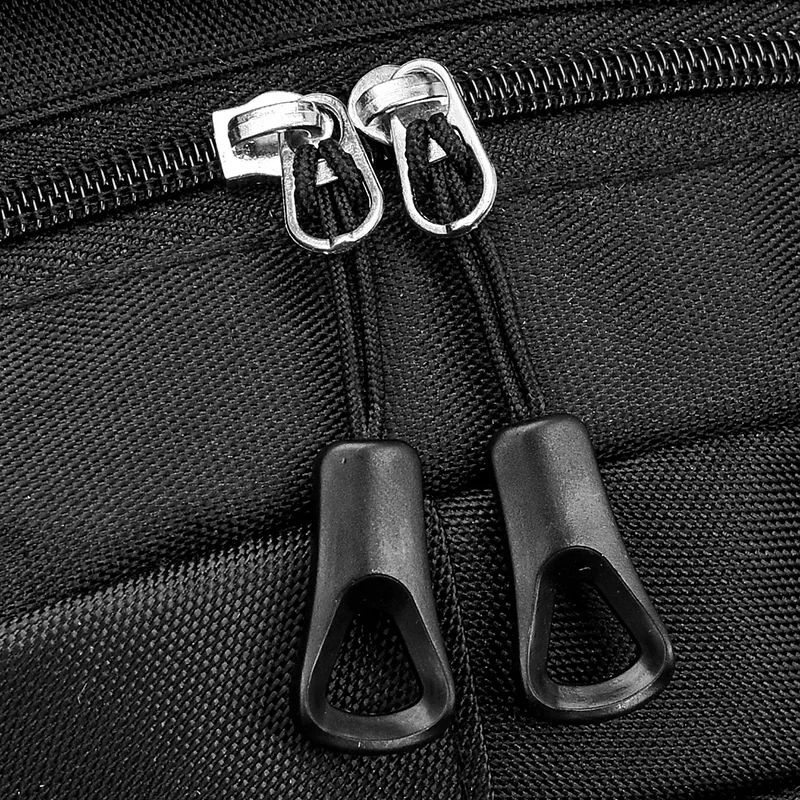
Lining and hardware are where margin is quietly found. If “what denier lining?” or “whose zippers?” gets a shrug, expect substitutions mid-order. Our guides to zippers and hardware that last and to 210D vs 420D lining show what a real answer sounds like.
Sampling: The Only Real Test
A supplier’s answers are a filter; the sample is the test. Nothing here replaces holding the bag in your hands before you commit to volume.
What to Check on the Sample
- Device fit. Put the real device in, close the bag, shake it. The sleeve should hold it with slight clearance — not grip, not slide.
- Zipper cycles. Open and close every zipper twenty times. Feel for snagging at the corners, where cheap zippers fail first.
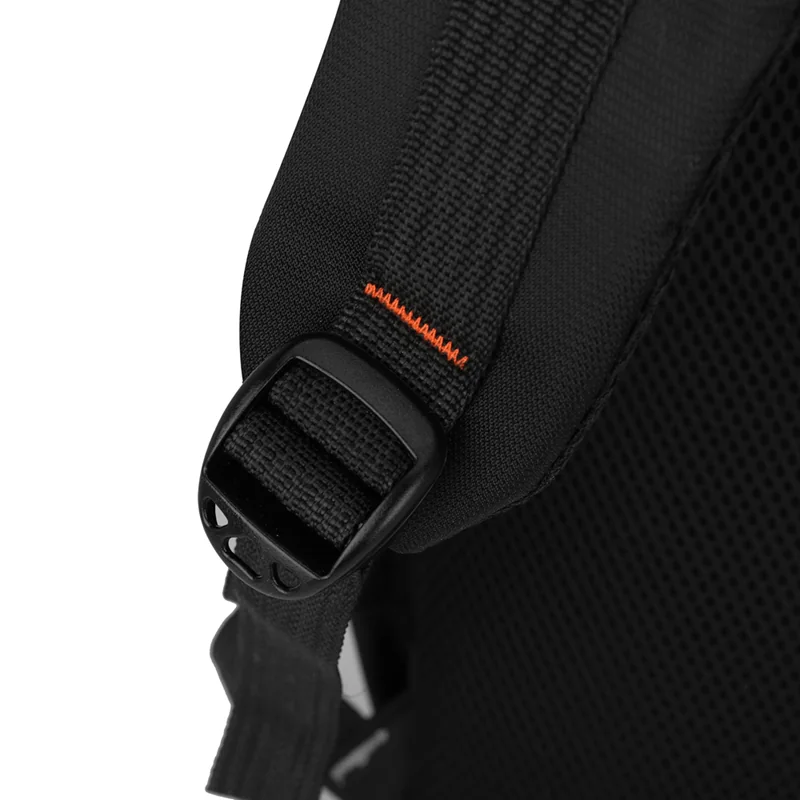
- Strap anchors. Pull hard on both straps and inspect the attachment. Bar-tack stitching shows the joint was designed, not just sewn.
- Stitch density. Check the topstitching and the seam ends. Uneven density or loose threads on a sample will be worse in bulk.
- Hardware feel. Sliders, buckles and pullers should feel solid and run smoothly — the fastest proxy for component grade.
Timeline and What “On Time” Looks Like
Ask for the timeline in two parts and write both into the order. At our Baigou factory, samples take 7–10 days and bulk takes 25–35 days after approval and deposit. Three-day samples or one-week bulk is a warning, not a bargain. Moving from a tech pack to a sample covers what must be settled first.
What We Are Set Up For
Most supplier pages describe what a supplier could do. This is what this workshop is actually set up for, so you can judge the fit before you spend time on a sample.
- Cut-and-sew production for backpacks, daypacks, school bags, travel duffels and PU handbags — 30+ people in a 500 m² workshop in Baigou, Hebei.
- Ready-stock colourways from 50 pcs per colour, shipped from existing inventory.
- Custom development from 300 pcs per style per colour: your logo, your colour, your lining and hardware selection, within an existing pattern.
- Logo application by embroidery, screen print, heat transfer, silicone or rubber patch, and metal badge — from US$0.10 per piece.
- Custom Pantone colour matching from 500 pcs per colour.
- Sampling in 7–10 days, bulk in 25–35 days after approval and deposit.
- A cost breakdown by component on request, so you can see where the money sits.
How We Work
- We build from your spec — a tech pack, an approved sample or a reference bag. The sample then confirms your specification instead of guessing at it.
- Development sits within an existing pattern — colour, material, logo, size and compartment layout. Projects that need a new frame or a moulded panel belong with a specialist, and we will say so at enquiry stage.
- Compliance paperwork. We provide our business licence, product photos and process video on request, and work with the laboratory and auditor you nominate.
- We quote per project. MOQ and price follow the build, so we would rather quote your spec than publish one number for the whole catalogue.
If that fits the order you have in mind, the twelve-point checklist above is the fastest way to compare us against the next factory on your list.
Ordering Corporate Gift Backpacks? Three Extra Checks
Corporate and promotional orders add three checks on top of the twelve above.
- Logo placement tolerance. With embroidery or a patch, ask for the tolerance in millimetres. A few millimetres of drift is invisible on one bag and obvious across five hundred.
- Colour matching to a brand Pantone. Pantone matching starts at 500–1,000 pcs per colour at our factory. Below that, expect the nearest stock shade.
- Batch consistency across split deliveries. If the order ships in several batches, confirm the fabric and lining come from one lot — or accept a possible shade difference.
Corporate gifting also runs on a fixed calendar, so the timeline matters more than the price. Our corporate and promotional backpacks range is built around that constraint.
FAQ: Choosing a Business Backpack Supplier
What is the MOQ for a custom business backpack?
300 pcs per style for custom development; stock colourways from 50 pcs per colour, and Pantone matching from 500–1,000 pcs per colour.
How long do samples and bulk take?
7–10 days for sampling, then 25–35 days for bulk after approval and deposit. Pattern development happens before that clock starts.
Can I mix styles or colours in one order?
Often yes, but MOQ applies per style and per colour, so mixing multiplies the minimum. Ask for the breakdown in writing.
Can you match fabric and hardware to Pantone?
Fabric colour matching is achievable above 500–1,000 pcs per colour. Hardware finishes are selected from available moulds rather than matched freely.
How fast will I get a quote?
We reply within 24 hours. A supplier who takes a week to answer a first enquiry will be slower on every question after it. If MOQ is your sticking point, how MOQ is calculated explains what you can negotiate.
How do I find a laptop backpack supplier in China?
Start from the category, not the marketplace. Decide the device sizes you need to fit, the volume and the finish level, then look for factories that already build laptop backpacks as a line rather than general bag makers. Ask for a live video of the line, a sleeve spec and two units from the same production run. The twelve-point checklist above is the filter.
Is it cheaper to buy from a manufacturer or a trading company?
Not automatically either way. A trading company can be cheaper on small mixed orders, because it consolidates several factories and absorbs their minimums. A factory can be cheaper once your spec is stable and your volume clears its MOQ, because there is no intermediary margin. The real difference is who owns the specification — and therefore who pays when the goods arrive wrong. Compare quotes on an identical spec sheet.
What is the minimum order for a laptop backpack?
At our factory, ready-stock colourways start at 50 pcs per colour. Custom development — your fabric, hardware or compartment layout — starts at 300 pcs per style per colour. Structural changes are quoted per project, typically in the 300–500 pcs range, because the pattern and sample cost have to be absorbed. MOQ is a range that follows the difficulty of the build, not a single number we can publish for the whole catalogue.
Send us your spec, target quantity and destination market. We will tell you what is achievable at that volume, what the sample timeline looks like, and where the design needs attention.
Not sure which model suits your market? Tell us the device sizes, target retail price and quantity, and we will propose a fitting sleeve spec and hardware grade.