Zippers and hardware are the parts of a bag your customer touches every single day. Fabric can be gorgeous and stitching can be perfect, but if the zipper splits or the plating turns black within a month, the whole bag reads as “cheap” — no matter what it cost.
This guide breaks down exactly what separates hardware that survives five years of daily use from hardware that fails in one. We build bags for wholesale and OEM/ODM clients, so everything below is written from the factory floor: what we specify, what we refuse to specify, and how you can check a sample before you commit to a production run.
Which Zipper Is the Most Durable? The Short Answer
If you need one answer: a nylon coil zipper in #5 or #8 gauge with a locking slider is the most durable choice for a backpack. It bends without fatiguing, and keeps working after the teeth wear smooth.
- Most durable on curved, high-use openings: nylon coil — #5 for main compartments, #8–#10 for loaded travel packs.
- Most durable on straight premium openings: metal (brass or aluminium), #5 and above.
- Sporty look, medium durability: Vislon / molded resin, for lightly stressed outer pockets.
Durability is not a brand on the tape — it is gauge, slider tension, tape quality and plating.
Why Hardware Decides Whether a Bag Feels Cheap
A backpack has one zipper on the main compartment, two to four on pockets, and a handful of buckles, sliders and D-rings. That is maybe eight small metal or plastic parts on a product that will be opened and closed thousands of times.
Buyers rarely complain about fabric. They complain about a zipper that jams, a buckle that snaps, or a gold puller that turns silver. Hardware is also the cheapest part of the bill of materials to upgrade — which makes it the highest-leverage decision in the whole spec sheet.
Zipper Anatomy: Tape, Teeth, Slider and Puller
Before comparing zipper types, it helps to know the four parts, because they fail for different reasons:
- Tape — the woven fabric strip the teeth are attached to. Cheap tape stretches and puckers.
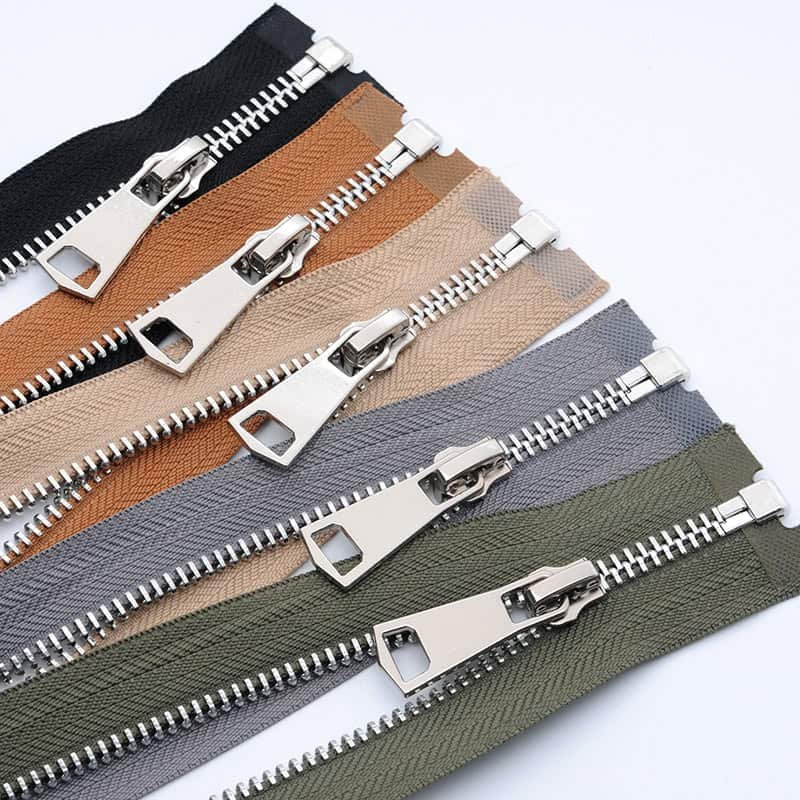
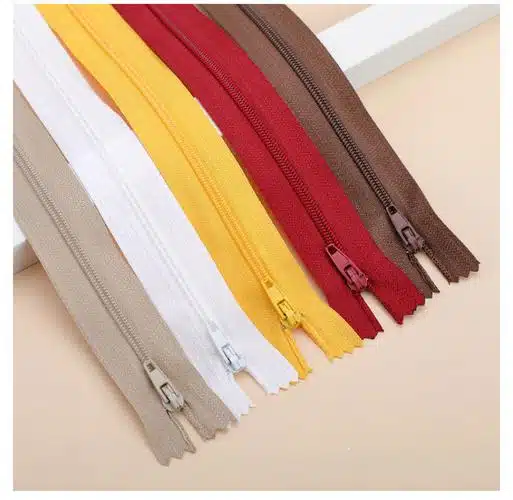
- Teeth — nylon coil, molded plastic, or metal. This is what most people mean by “zipper type.”
- Slider — the moving piece that meshes the teeth. A loose slider is the number one cause of a “splitting” zipper.
- Puller — the tab you grip. It is also your best branding surface.
When a customer says “the zipper broke,” it is usually the slider or the tape — not the teeth. That is why a good zipper is a system, not just a brand name on the tape.
Zipper size matters as much as zipper type. Zippers are sold by gauge — the number stamped on the slider (#3, #5, #8, #10) refers to the width of the closed teeth in millimetres. A #5 coil is the everyday default for bag main compartments. #8 and #10 are heavier-duty and belong on luggage, tool bags and tactical packs. Putting a #3 zipper on a loaded travel bag will fail eventually no matter whose tape is on it, which is why we specify the gauge alongside the brand on every tech pack.
Nylon Coil vs Metal vs Vislon: Which Teeth Last Longest
There is no single “best” zipper. There is only the right zipper for the bag’s job. Here is how the three common types actually compare:
| Zipper type | Teeth | Abrasion resistance | Flexibility | Best used for | Relative cost |
|---|---|---|---|---|---|
| Nylon coil | Continuous spiral nylon | Good | Very high — bends around curves | Backpacks, luggage, interior pockets, curved openings | $ |
| Vislon / molded resin | Chunky molded plastic | Good | Medium | Sporty and casual bags, outer pockets | $$ |
| Metal (brass, aluminum) | Individual metal teeth | Very high | Low — cannot bend | Leather handbags, fashion totes, straight openings | $$$ |
Practical rule: use nylon coil anywhere the zipper has to curve or take repeated lateral stress (main backpack compartments, trolley cases). Use metal only on straight runs where the premium look and feel justify the weight and the higher cost.
The Slider and Puller: Where Cheap Hardware Fails First
Two sliders of the same size can differ enormously in quality, and the difference is invisible in a photo. What we check:
- Slider spring tension — a weak spring lets the teeth separate under load. Squeeze-test the slider on a loaded bag, not an empty one.
- Puller attachment — a stamped, folded puller opens up over time. A solid cast or welded puller does not.
- Auto-lock — a locking slider stops the zipper drifting open on a full pack. Worth specifying on travel and laptop bags.
This is also where brand matters less than most buyers assume. The two names you will see most often in Chinese bag factories are YKK and SBS. YKK is the global benchmark and carries a price premium; SBS is the leading domestic brand and delivers very close performance at a lower cost. For a luxury line, YKK is the safe answer. For mid-range and promotional programmes, SBS is a legitimate cost-saving choice — provided the slider spec is right.
Buckles, D-Rings and Webbing: Matching Hardware to Load
Buckles fail in two ways: they snap, or they slip. Both are usually a material problem, so start there.
| Material | Strength | Weight | Feel | Best for |
|---|---|---|---|---|
| POM (acetal plastic) | High — shatter-resistant | Very light | Functional, audible “click” | Backpacks, outdoor gear, sternum straps |
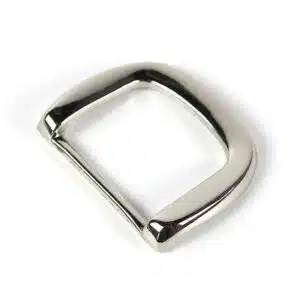
| Zinc alloy | High | Heavy | Cold, solid, premium | Fashion handbags, decorative locks |
| Nylon (cheap plastic) | Low — brittle in cold | Light | Hollow, rattly | Avoid on load-bearing points |
POM is the industry standard for anything that carries weight on a backpack or hiking pack. Zinc alloy is the standard for fashion handbags and totes, where the weight and cold-to-the-touch feel are the point.
One more detail most buyers miss: webbing width must match the buckle. A 25 mm buckle on 25 mm webbing is correct; the same buckle on 20 mm webbing will slip under load no matter how good the plastic is.
Plating and Finish: How to Avoid the “Cheap Fade”
Gold hardware that turns black, or smells faintly of rust, is a plating problem — and it is entirely preventable if you know what to ask for.
- Barrel (rolling) plating — parts are tumbled together. Faster and cheaper, but the coating is thin and uneven, and it scratches early. Avoid this for any exterior hardware.
- Rack (hanging) plating — each piece is hung individually through the plating line. The result is a smooth, even, mirror finish that holds its colour far longer.
- Seal oil / glazing — an invisible clear topcoat applied after plating. It is the single cheapest way to slow oxidation on metal hardware, and it is the first thing a low-cost factory skips.
If you are buying gold or rose-gold hardware, ask explicitly for rack plating plus seal oil, and ask for a salt-spray or wear test report on the finish before approving bulk.
One more variable buyers rarely think about: plating thickness. A finish measured in fractions of a micron looks identical to a properly plated one on day one — and completely different after six months of handling. If one quote for “gold hardware” is dramatically cheaper than another, plating thickness is usually where the difference was made. Specify a minimum thickness in your tech pack and keep the approved sample as the reference for bulk.
Hardware QC Checklist for Buyers
Run through this list on the pre-production sample — not on the bulk order:
- Zip a loaded bag 30 times. Does the slider stay closed?
- Confirm the zipper tape brand and slider model in writing, not just “YKK style”.
- Flex every buckle and D-ring. Listen for cracking.
- Check that webbing width equals buckle width on all load-bearing points.
- Rub the plated surface with a soft cloth — does colour transfer?
- Ask for the plating method (rack vs barrel) and whether seal oil is applied.
- Confirm spare sliders and pullers are included in the carton for after-sales.
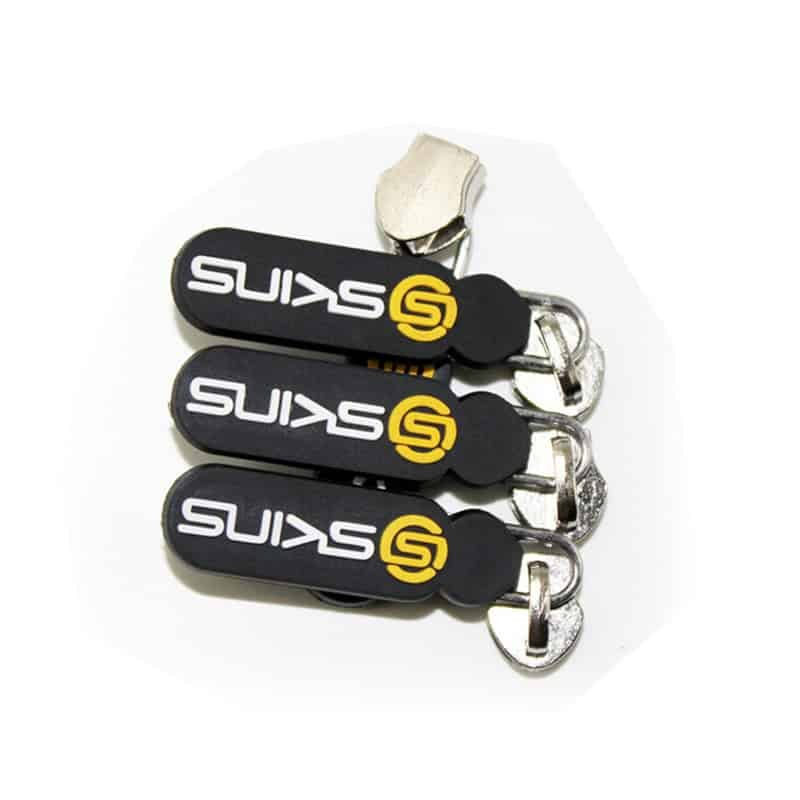
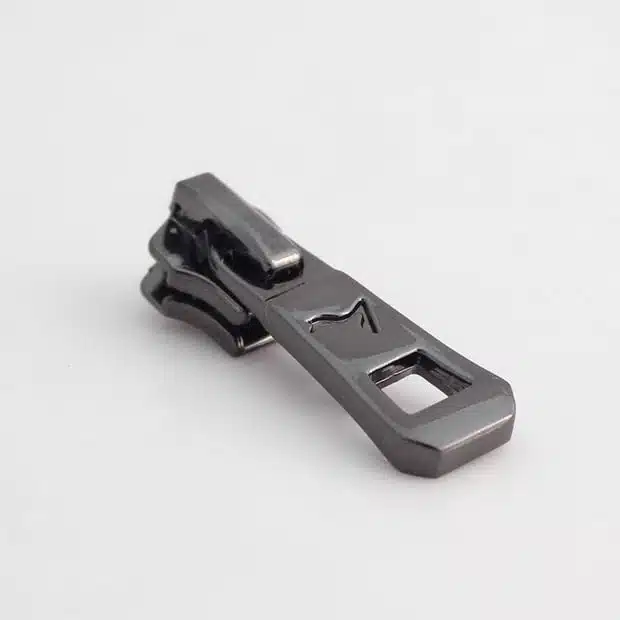
Custom Pullers: The Cheapest Branding You Will Ever Buy
The puller is the one component a customer physically holds every time they use the bag. Two options, depending on budget:
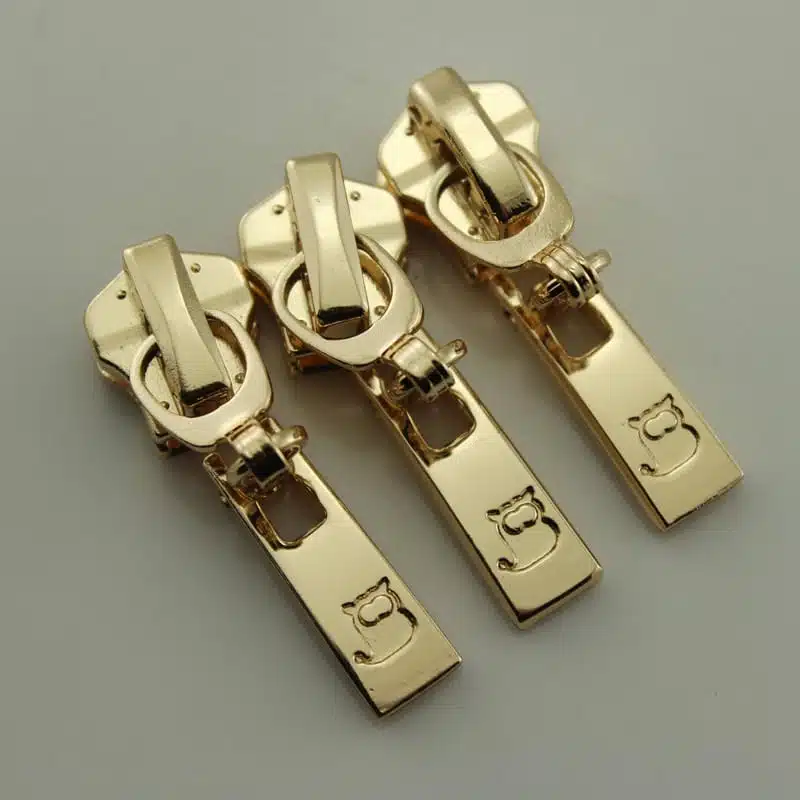
- Laser engraving — your logo etched onto an existing stock puller. No tooling cost, fast, ideal for first orders and promotional runs.
- Die-casting a custom mould — a bespoke puller shape with a raised logo. This carries a one-off mould fee, but it makes the bag unmistakably yours and is worth it once volumes are stable.
For a wholesale programme, we usually recommend starting with engraving, then moving to a custom mould once a design proves itself. You can see how this fits into a full business and laptop backpack specification, where hardware is one line of a much longer bill of materials.
For corporate gifting the same logic applies across a branded order — see our corporate and promotional backpacks range.
How Zipper Durability Is Tested Before You Commit
Durability claims are cheap. These four tests produce evidence:
- Cycle testing — open and close it repeatedly on a loaded bag. This exposes slider wear before the teeth give up.
- Slider tension under load — squeeze-test on a packed bag; one that separates has already failed.
- Tape abrasion and flex — bend the zipper around your pattern’s tightest curve.
- Salt-spray testing — the only reliable way to predict whether gold stays gold.
Ask for the method and the report, not a headline number — we will not publish a cycle count as a benchmark: load and tape tension change the result. See our business backpack supplier vetting checklist.
FAQ: Backpack Hardware
Is YKK always worth the extra cost?
For luxury positioning, yes — the brand is part of the story you are selling. For mid-range and promotional bags, a well-specified SBS zipper with a locking slider is usually the better value.
What is the most common cause of a zipper splitting open?
A worn or under-tensioned slider. The teeth are usually fine. Specifying a locking slider and checking it on a loaded bag catches most of these failures before production.
Can you match a specific Pantone colour on metal hardware?
Plated metal is matched to a finish reference (gold, rose gold, gunmetal, antique brass and so on) rather than to an exact Pantone. We send physical finish swatches for approval. For custom colour changes on bag bodies, the minimum is typically 500–1,000 pcs.
What is your MOQ for custom hardware and pullers?
Stock hardware is available from 50 pcs on in-stock styles. Custom hardware and moulded pullers are part of our OEM/ODM programme, which starts at 300 pcs. Sampling takes 7–10 days and bulk production 25–35 days.
Want to see the hardware we actually use? Ask us for a physical swatch book with zipper tapes, sliders, buckles and plating finishes, and we will send it with your sample.